What "Train the Whole Fighter" Actually Means in a Session
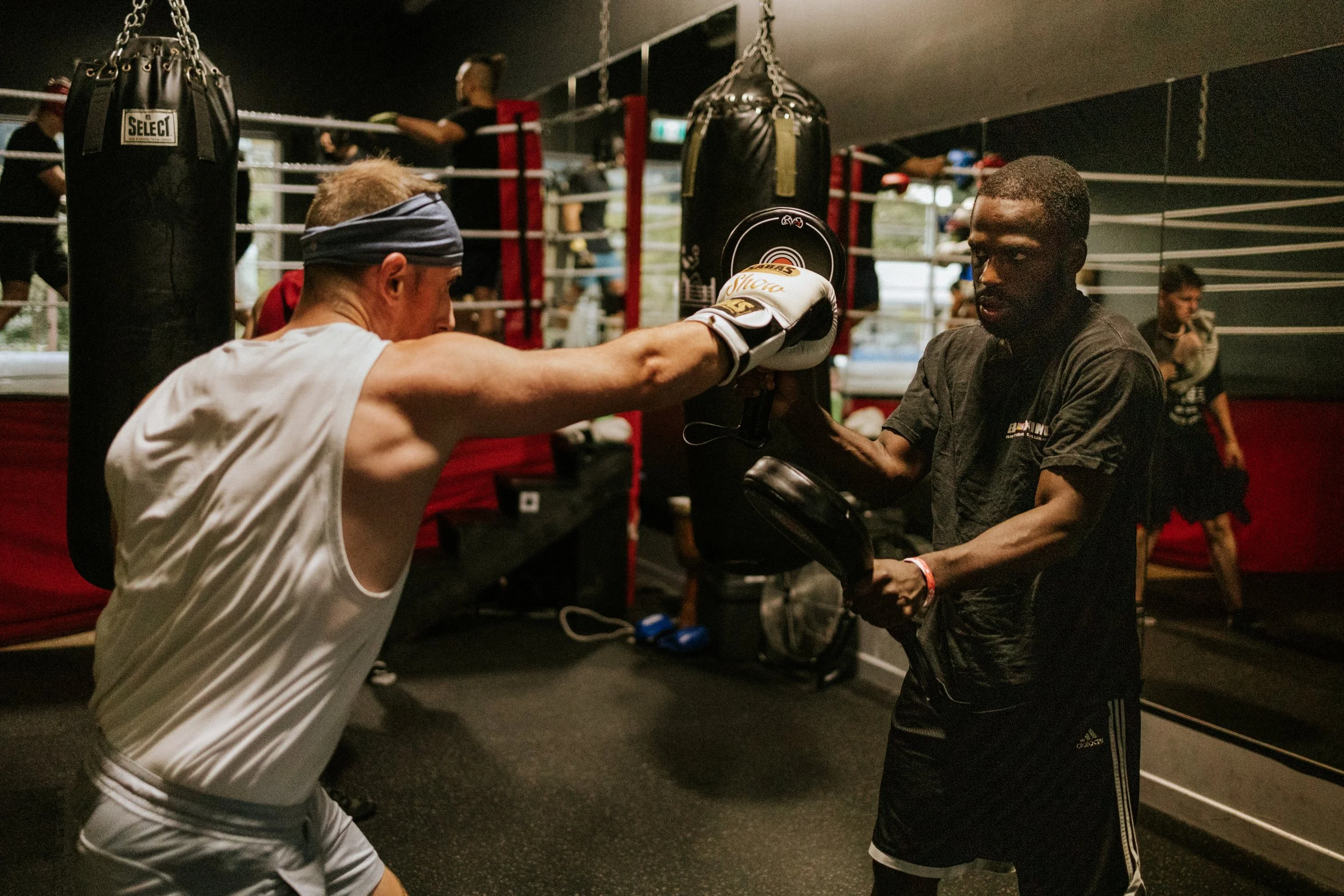
Boxing coach, Shoy, holds focus mitts for a client throwing a jab in a gym.
Most people walk into a workout with me expecting one thing: to get hit with a muscle-crippling sweat-session. Push yourself, make some new muscles, feel sore arms the next day. And my clients get that. But if that's all that happened in my sessions, I'd be doing half my job.
The mind trains the same way the body does
Boxing puts you in a strange position most workouts never touch: someone coming straight at you, and you have to think clearly anyway. Not tomorrow, not after you've calmed down. Right now. Mid-exchange. While your instinct is screaming at you to panic.
At first, everyone panics a little. It’s normal for your brain to freak out when there’s a fist coming straight at you. We all have this little thing in our brains called the amygdala. You may have heard of it before, as it’s in charge of our “fight-or-flight” response system, which acts as our body’s threat detector, and it’s constantly scanning our environments for signs of danger.
But after we spend a few rounds, and few sessions on the bags something starts to shift. You stop flinching at the first sign of pressure. You start reading your opponent instead.
And that skill doesn't stay in the ring.
It shows up in the meeting where someone challenges your idea in front of everyone. It shows up in the hard conversation you've been putting off for weeks. It shows up in the deadline that used to make your chest tight — and somehow doesn't anymore.
I didn't design my coaching around that on purpose, not at first. I noticed it happening to my own clients before I understood why. Enough people told me the same thing, "I didn't expect to feel this calm," that I stopped treating it as a side effect and started treating it as the actual point.
Two things, every session
That's why I coach two things at once, not one.
The boxing. Footwork, defense, technique, the strength work behind all of it. This is the part everyone expects, and it matters. You don't get the mental benefit without the physical skill underneath it. Sloppy technique under pressure just teaches you to panic more efficiently.
The mind. Staying level when things speed up. Thinking instead of reacting. This is the part that surprises people, and it's the part that sticks around the longest after they leave the gym.
You can't fake your way into either one. You earn both, round by round.
What this actually looks like in a session
It's not abstract. It's built into the drills. Combinations under a shot clock so you're forced to think while fatigued. Sparring-adjacent work that puts a little real pressure on you, scaled to where you're at, so you feel what it's like to stay composed instead of just being told to. Mistakes get corrected in the moment, out loud, so you learn to hear feedback mid-action instead of freezing up when something goes wrong.
None of it is complicated. It's just consistent. That's the whole philosophy, really showing up, round after round, until staying calm under pressure stops being a skill you're reaching for and starts being who you are.
If this sounds like what you're looking for
Whether you're chasing fitness, confidence, or an actual fight, the sessions are built the same way: real technique, and the mental steadiness that holds up long after you've left the gym.
